The World Health Organization and the Ministry of Health of Kyrgyzstan conducted simulation exercise at the “Dostuk” checkpoint
18 September 2025
FRIDAY, SEPTEMBER 12, 2025
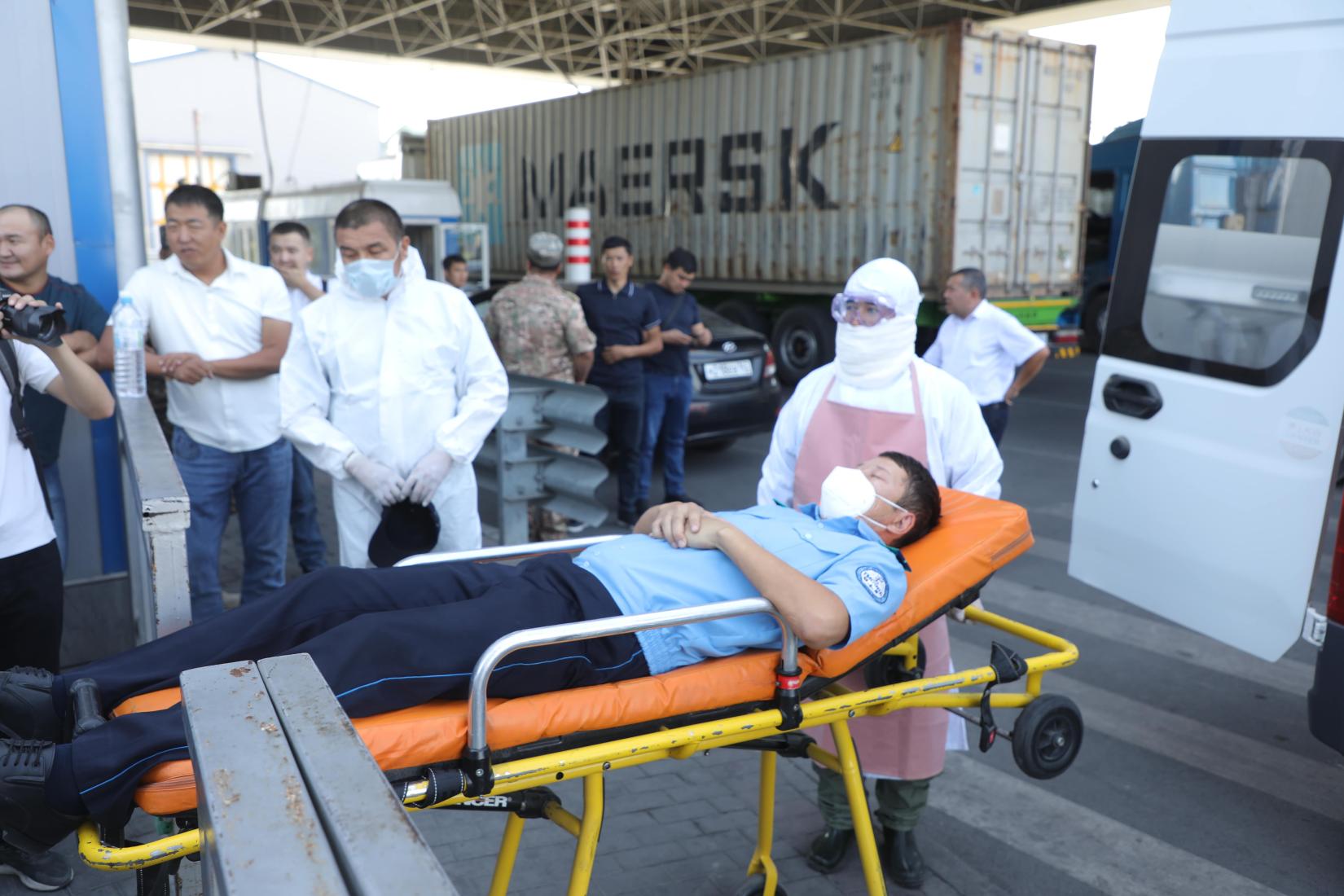
Bishkek, KYRGYZSTAN – The World Health Organization (WHO), in collaboration with the Ministry of Health of Kyrgyzstan and with support from the Pandemic Fund, conducted a two-day simulation exercise (SimEx) at the “Dostuk” checkpoint in Osh. The exercise aimed to test and strengthen the country's preparedness to respond to public health emergencies, specifically the detection and elimination of a cholera outbreak.
This simulation exercise was designed to assess the effectiveness of existing operational protocols in response to suspected cases of infectious disease importation. Divided into four stages, the exercise simulated various scenarios, from the detection of a patient to the provision of care to all patients in a medical facility.
Denis Titarenko, WHO Health Emergency Support Officer, emphasized the importance of such activities in improving emergency preparedness. “Such simulation exercises play an important role in identifying and addressing gaps in our response capabilities,” he said. “By providing participants with hands-on experience in a simulated emergency scenario, we can refine protocols and improve our readiness to address real-world challenges.”

"The scenario was realistic and allowed us to effectively test interagency coordination and algorithms for identifying suspicious cases. The exercises at the entry points showed a high level of preparedness of personnel to respond to the possible introduction of cholera into the country," commented Gulzat Kubanychbekova, Director of the Republican Center for Prevention and Control of Especially Dangerous and Quarantine Infections (RCPICQI) under the Ministry of Health of Kyrgyzstan.
Representatives of key organizations, including the Ministry of Health and subordinate organizations - RCPICQ, the Department of State Sanitary and Epidemiological Surveillance, the Customs Service, and other state ministries and agencies - took an active part in the exercises. Their cooperation underscored the importance of cross-sectoral coordination in the timely delivery of health services.

These simulation exercises are part of the implementation of the National Action Plan for Health Security (NAPHS) for 2024–2026 and a continuation of the WHO training course conducted in April 2025. These measures demonstrate the commitment of all stakeholders to protecting public health and strengthening the country’s resilience against future threats.




UN entities involved in this initiative
Goals we are supporting through this initiative